I've decided to set The Beauty of the Infinite aside for a while and pick up Blaise Pascal's Pensées.
It's not that I haven't been enjoying The Beauty of the Infinite - I think it may be the most important book I have read since undertaking Hans urs von Balthasar's The Glory of the Lord in graduate school. But ... here's an example of an relatively readable passage:
"If then a theology of beauty stands with the concrete and particular, in defiance of any species of thought that places its faith in abstraction or generalities, it militates of necessity against practices that simply sort narratives into discrete categories of story and metaphysics, myth and meaning, symbol and reality, and then rest content; the more difficult practice of approaching narratives already prepared to be defeated by the unique, uncategorizable, and irreducible in each, is also the more fruitful (and charitable). Beauty, when not made subject to a symbolic economy, calls attention to those details of surface, those nuances and recalcitrant peculiarities, that distinguish one story from another, one narrative moment from another, and so discourage idle chatter concerning the “nature” of religious language or religious truth. If indeed Christianity embraces “the aesthetic principle par excellence,” then abstraction is the thing most contrary and deadening to the truth it offers. This provides perhaps the best definition of metaphysics, in the opprobrious sense of the word: an inexorable volition toward the abstract. “Metaphysics,” so conceived, has no real name for beauty, and can account for it, if at all, only in terms of a formless ideality that is, aesthetically speaking, the only true deformity: the privation of form. God’s glory, though, is neither ethereal nor remote, but is beauty, quantity, abundance, kabod: it has weight, density, and presence. Moreover, it has been seen in the form of a slave, revealed in a particular shape whose place and time in space is determinative of every other truth, every other beauty. In the end, that within Christianity which draws persons to itself is a concrete and particular beauty, because concrete and particular beauty is its deepest truth."
This is extremely important. My entire life of the mind depends upon this paragraph.
Nonetheless, when that's a readable paragraph ... well ... Pascal's little notes on "the Machine" and faith are a lot easier to digest under a cottonwood tree by the stream.
I'll pick up The Beauty of the Infinite again this winter - when the landscape is burried in monochromatic death in life.
Monday, June 06, 2005


Sunday, June 05, 2005


Late Spring Loneliness
Loneliness is an interesting phenomenon.
Brother Damien was supposed to come by Friday - but didn't. Nor Saturday.
Camilla hasn't come around the last two days either.
It isn't solitude that creates loneliness, but the unmaterialized expectation of company.
Things go on as before. Nothing has changed. The past two days were fabulous for cloud watching. The shade of the trees was just as cool in the late afternoon.
But the fading expectation of company dampens all.
God look with mercy upon all the Annies and Eleanors in the world tonight.
Brother Damien was supposed to come by Friday - but didn't. Nor Saturday.
Camilla hasn't come around the last two days either.
It isn't solitude that creates loneliness, but the unmaterialized expectation of company.
Things go on as before. Nothing has changed. The past two days were fabulous for cloud watching. The shade of the trees was just as cool in the late afternoon.
But the fading expectation of company dampens all.
God look with mercy upon all the Annies and Eleanors in the world tonight.
Saturday, June 04, 2005
The Garden
Camilla was over for dinner again yesterday and stayed and helped me weed the garden.
It's coming along nicely - when I can keep those cursed rabbits out. I put chicken wire around the entire plot but they still manage to get in every now and then. Find a hole and slip through. Of course, if I can catch one of them in there, it does give me an easy shot.
Maybe I should skin of of them and stuff him and make a little rabbit scarecrow. With a little felt hat. Maybe some little obsidian eyes.
I've already harvested some peas, mustard greens, leaf lettuce, and kale. In the next week or two I should get the first heads of cauliflower and broccoli. Carrots and beets should be ready soon, too. I pulled one carrot, but it was too small. Good, but small.
It's coming along nicely - when I can keep those cursed rabbits out. I put chicken wire around the entire plot but they still manage to get in every now and then. Find a hole and slip through. Of course, if I can catch one of them in there, it does give me an easy shot.
Maybe I should skin of of them and stuff him and make a little rabbit scarecrow. With a little felt hat. Maybe some little obsidian eyes.
I've already harvested some peas, mustard greens, leaf lettuce, and kale. In the next week or two I should get the first heads of cauliflower and broccoli. Carrots and beets should be ready soon, too. I pulled one carrot, but it was too small. Good, but small.
Friday, June 03, 2005
Quote of the Day 6/3/05
Curiously enough, it seems to be only in describing a mode of language which does not mean what it says that one can actually say what one means.
Paul de Man in Blindness and Insight
Paul de Man in Blindness and Insight
Thursday, June 02, 2005
The Fifth Poetry Workshop
The poetry workshop went well again. I thought we would follow the pattern that I seem to have inadvertently established of alternating between form and feeling, sound and sense. Since we spent the last time we were together scanning, I decided that this week we would begin to explore poetry's tendency to make meaning by metaphor.
When most people think of 'metaphor' they think of it as a mechanical 'poetic device' - a tool in the poet's toolbox, a simile without 'like' or 'as', something to be 'used' for some other purpose.
But metaphor is not a thing to be used. Metaphor is an articulation of an entire way of Seeing - perhaps of an entire way of Being. Metaphoria is a state of mind. It is the domain of the poet and of the poetic in all of us. It is the essence of language and probably of thought. All that is worthwhile is worthwhile because of metaphor. Metaphor is ecstasy. Metaphor is the quintessence. Metaphor is the mushroom of life.
In life, metaphor surrounds us, encompases us, moves through us like the air. You can feel metaphor on a warm brick wall, along the scar that runs across the back of your thumb, in the grass beneath your feet, in a look in your lover's eye.
In poetry, metaphor happens when two seemingly unlike things are brought near and their likeness revealed - their spiritual unity unveiled by the poet.
Consider, for instance, this little poem by Carl Sandburg:
__________
"Fog"
The fog comes
on little cat feet.
It sits looking
over harbor and city
on silent haunches
and then moves on.
__________
Who can read that poem and not exclaim, "Yes! Amen!" It is right that the cat and the fog were brought near! Thank you Carl Sandburg! We do see their spiritual unity! Fog will never again come in on anything less than 'little cat feet'!
At any rate, the monks and I spent the afternoon skipping stones and conjuring metaphors down by the lake.
Not all of them were good. Some of them were downright bad. But that's OK. Both Seeing and Being take time and practice.
One of my favorites, though, was the discovery of the spiritual unity between the Sky and Death. It's not immediately apparent, but it's there. Oh, yes. It's there. And you learn to pay attention when an aged monk lies down on his back for 30 minutes staring up into the sky and then sits up and pronounces with a look of excitement on his face - Death!
__________
And so we proceed to dinner -
Appetizer
New Potatoes Stuffed with Smoked Salmon and Horseradish
First Course
French Onion Soup
Main Course
Filet Mignon with Mushrooms and Madiera Sauce
served with a Green Salad
w/ Diamond Mountain Ranch Cabernet Sauvignon 2000
Dessert
Apricot Sunburst
w/ Inga Grappa di Moscato
__________
Quote of the Day 6/2/05
Cosimo was still at the age when the desire to tell stories makes one want to live more, thinking one has not done enough living to recount, and so off he would go hunting, and be away weeks, then return to the trees in the square, dangling by their tails polecats, badgers and foxes, and tell the folk of Ombrosa new stories, which originally true, became, as he told them, invented, and from invented, true.
in Italo Calvino's The Baron in the Trees
in Italo Calvino's The Baron in the Trees
A Solitary Day
I spent the entire day alone yesterday.
What relief for an eremite!
I did some gardening in the early morning. (I like gardening best in the early morning when the dew is still heavy and the sun is just breathing life into the world again.) Afterwards, I hiked up to Point Decidere. I was going to hike over the crest of the hill, just to see what I could see - to see what was on the other side. But after the crisis last week, it just didn't seem right to go casually exploring beyond the pale of my decision. So henceforth, until I leave forever, I will not cross the ridge of hills on my side of the valley. It has become a sacred barrier.
I found some nice oyster mushrooms on the way down and cooked them up for dinner. Very nice.
This afternoon I will be heading down to St. Godric's for the poetry session. I think we will probably work with haiku. And I am definitely staying for dinner.
What relief for an eremite!
I did some gardening in the early morning. (I like gardening best in the early morning when the dew is still heavy and the sun is just breathing life into the world again.) Afterwards, I hiked up to Point Decidere. I was going to hike over the crest of the hill, just to see what I could see - to see what was on the other side. But after the crisis last week, it just didn't seem right to go casually exploring beyond the pale of my decision. So henceforth, until I leave forever, I will not cross the ridge of hills on my side of the valley. It has become a sacred barrier.
I found some nice oyster mushrooms on the way down and cooked them up for dinner. Very nice.
This afternoon I will be heading down to St. Godric's for the poetry session. I think we will probably work with haiku. And I am definitely staying for dinner.
Tuesday, May 31, 2005
Brother Damien's Poetic Impulse
Brother Damien came by mid-morning. I had just gotten back from fishing - kept several that were 10 - 12 inches. I thought they would make a nice lunch for the two of us. I also found a little patch of sorrel that will spruce up a salad nicely.
When he first arrived I could tell he was a little nervous. (I would think that he had told Father Joseph why he was coming up here. I sure hope so.)
For whatever reason, he was timid about this meeting. I've noticed this before, though. There is a certain high-strung something in new poets - or, rather, in those who wish to be poets. They also tend to have confessional instincts and a bent towards self-expression. What concerned me particularly in Brother Damien's case was that he might be feeling these things to be powerfully at odds with his monastic vocation. I do not want to be the cause of his unnecessarily abandoning the life of the Coenobitic Seeker for the life of a Seeker-Errant. There are too few as it is who follow the quest according to such a disciplined pattern of common life.
But new poets often wish, as Brother Damien does, to give vent to some hidden thing, some essential core, some secret self that lies buried within, barely visible beneath the surface but throbbing away down there in the depths. And be it devil or angel, it must out!
Not only is this dangerous for a new monk, however, it is not, in my opinion, particularly helpful to learning how to write good poetry. I think this is why most poetry written even by good poets early in their lives is just bad. The impulses are disordered an chaotic. The vision is too self-conscious, even self-referential. Nothing is restrained by the richness and beauty of the language itself. All gives way before the terrible power of self-disclosure. But, hey, we all have to start somewhere - and the Dionysian violence of the hidden, misunderstood self is at least a power to be reckoned with.
I gave him several directions we could take and then after discussing them and plotting a course, we began some poetic exercises - transformations from free verse to iambic, experimentation with trochaic substitution, enjambed versus end stopped lines, etc. This kind of formal manipulation is often just the cure for the overactive ego in a new poet. Fortunately, Brother Damien really took to it. He has a good ear for the language and that is important. A poet who can't hear may be worse than a poet who can't feel. Brother Damien is certainly neither.
We were in the process of working up some childhood memories of home into blank verse, though, when Camilla showed up for lunch.
Oh boy.
Brother Damien was quite taken aback.
He had, apparently, met her during her brief stop at St. Godric's, but was under the impression that she was leaving the valley from there.
After 10 or 15 minutes of a relatively awkward exchange of pleasantries, Brother Damien announced that he had better be getting back, as he needed to be home for his late afternoon chores. I gave him some exercises and said I would see him on Thursday.
Given what I observed, I am not sure Camilla wasn't the efficient cause of Brother Damien's coming to me for help in learning how to tell people poetically that he was "not just a brother in a monastery." The timing is certainly suspect and his behavior upon her arrival was odd. Now, this doesn't necessarily mean anything. He could just be peculiarly sensitive to feminine beauty, merely shocked to find that she was still around, or embarrassed to have been found writing poetry with a crazy eremite. And he is, after all, a monk - forgive me. There are a hundred possible explanations.
But I suppose it's worth keeping my eye on if he is to be my student in any way.
Perhaps I should also talk to Father Joseph.
But this is not what I came out here to do! (More on this later.)
Camilla spent the afternoon and early evening at the cottage again. She helped with some of the gardening. I gave her her first fly fishing lesson and showed her a few native edible plants. She asked for a book. I lent her my copy of The Four Quartets.
Sigh.
What a life! Glory to God! Heels up!
When he first arrived I could tell he was a little nervous. (I would think that he had told Father Joseph why he was coming up here. I sure hope so.)
For whatever reason, he was timid about this meeting. I've noticed this before, though. There is a certain high-strung something in new poets - or, rather, in those who wish to be poets. They also tend to have confessional instincts and a bent towards self-expression. What concerned me particularly in Brother Damien's case was that he might be feeling these things to be powerfully at odds with his monastic vocation. I do not want to be the cause of his unnecessarily abandoning the life of the Coenobitic Seeker for the life of a Seeker-Errant. There are too few as it is who follow the quest according to such a disciplined pattern of common life.
But new poets often wish, as Brother Damien does, to give vent to some hidden thing, some essential core, some secret self that lies buried within, barely visible beneath the surface but throbbing away down there in the depths. And be it devil or angel, it must out!
Not only is this dangerous for a new monk, however, it is not, in my opinion, particularly helpful to learning how to write good poetry. I think this is why most poetry written even by good poets early in their lives is just bad. The impulses are disordered an chaotic. The vision is too self-conscious, even self-referential. Nothing is restrained by the richness and beauty of the language itself. All gives way before the terrible power of self-disclosure. But, hey, we all have to start somewhere - and the Dionysian violence of the hidden, misunderstood self is at least a power to be reckoned with.
I gave him several directions we could take and then after discussing them and plotting a course, we began some poetic exercises - transformations from free verse to iambic, experimentation with trochaic substitution, enjambed versus end stopped lines, etc. This kind of formal manipulation is often just the cure for the overactive ego in a new poet. Fortunately, Brother Damien really took to it. He has a good ear for the language and that is important. A poet who can't hear may be worse than a poet who can't feel. Brother Damien is certainly neither.
We were in the process of working up some childhood memories of home into blank verse, though, when Camilla showed up for lunch.
Oh boy.
Brother Damien was quite taken aback.
He had, apparently, met her during her brief stop at St. Godric's, but was under the impression that she was leaving the valley from there.
After 10 or 15 minutes of a relatively awkward exchange of pleasantries, Brother Damien announced that he had better be getting back, as he needed to be home for his late afternoon chores. I gave him some exercises and said I would see him on Thursday.
Given what I observed, I am not sure Camilla wasn't the efficient cause of Brother Damien's coming to me for help in learning how to tell people poetically that he was "not just a brother in a monastery." The timing is certainly suspect and his behavior upon her arrival was odd. Now, this doesn't necessarily mean anything. He could just be peculiarly sensitive to feminine beauty, merely shocked to find that she was still around, or embarrassed to have been found writing poetry with a crazy eremite. And he is, after all, a monk - forgive me. There are a hundred possible explanations.
But I suppose it's worth keeping my eye on if he is to be my student in any way.
Perhaps I should also talk to Father Joseph.
But this is not what I came out here to do! (More on this later.)
Camilla spent the afternoon and early evening at the cottage again. She helped with some of the gardening. I gave her her first fly fishing lesson and showed her a few native edible plants. She asked for a book. I lent her my copy of The Four Quartets.
Sigh.
What a life! Glory to God! Heels up!
Monday, May 30, 2005
Ease
Beautiful
the last couple of days
here in the valley
have been.
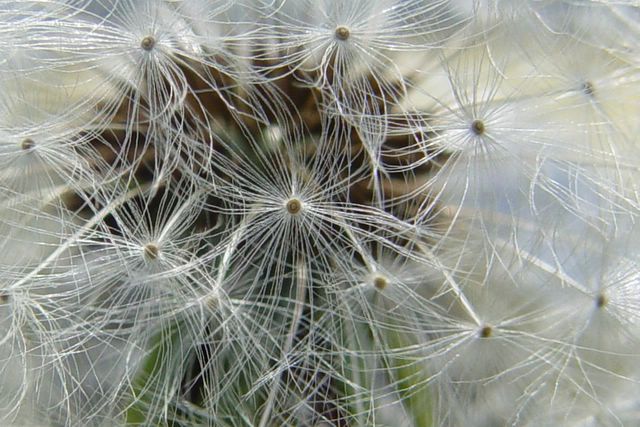
I think the crisis of several days ago has given me a greater capacity to appreciate the valley afresh - to experience jamais vu (pertaining to which, an interesting essay).
Camilla has been here the past two days and the root cellar is now covered.
It's now clear that she knows that I know that she needs more help that she wishes she did ... but she's working through it. She seems to be doing better physically now. I gave her her first fly-fishing lesson, but also told her not to be a purist. If you need a fish and you can't figure out the hatch, dig up a grub and drift it through the hole.
I toyed with the idea of suggesting that she move down closer, but I think that would be a huge mistake. I think she is still going to need a considerable measure of individual integrity and self-reliance to recover from whatever has been through, whatever she came up here to get away from.
Brother Damien is coming up the valley tommorrow for an individual poetry session. It should be fun.
the last couple of days
here in the valley
have been.
I think the crisis of several days ago has given me a greater capacity to appreciate the valley afresh - to experience jamais vu (pertaining to which, an interesting essay).
Camilla has been here the past two days and the root cellar is now covered.
It's now clear that she knows that I know that she needs more help that she wishes she did ... but she's working through it. She seems to be doing better physically now. I gave her her first fly-fishing lesson, but also told her not to be a purist. If you need a fish and you can't figure out the hatch, dig up a grub and drift it through the hole.
I toyed with the idea of suggesting that she move down closer, but I think that would be a huge mistake. I think she is still going to need a considerable measure of individual integrity and self-reliance to recover from whatever has been through, whatever she came up here to get away from.
Brother Damien is coming up the valley tommorrow for an individual poetry session. It should be fun.
Saturday, May 28, 2005
Trouble at the Cave
After lunch I went up to the caves across the valley to check in on Camilla.
It was a nice hike. The sun was starting to break through a little bit and I found a nice patch of plantain that I marked for some later harvest.
It took me about an hour and a half to get to the general area, and once I got there it didn't take me long to find her cave. Her sweater was sitting on a backpack just outside the entrance. It was really quiet, though, so I thought she must have been out hiking or collecting food or something.
I sat down on a rock nearby to wait ... threw some rocks ... watched the birds ... tried to compose a haiku. I even had a smoke. But after waiting quite some time (it must have been around two hours) I thought I would just leave a note and head back to the cottage – maybe invite her for lunch the next day or something. I didn't bring any pencil or paper, so thoughI was a bit uncomfortable with doing this, I walked into her cave to see if perhaps she had left anything lying around with which I could leave the note. And to my surprise, there she was, curled up on a pile of pine boughs, fast asleep in the late the afternoon, her feet sticking out from beneath a green flannel blanket. Her hair was uncombed and full of needles and her feet were pretty cut up. As I quickly backed out (bumping my head on the entrance) I saw a bottle of sleeping pills and an empty box of granola bars.
Once outside, I decided I should wait, needed to wait.
I went back to my rock and smoked another pipe in silence.
About an hour before sunset I heard some stirrings from inside the cave and several minutes later she came out yawning and stretched.
"Hi," I said before she had a chance to see me first and wonder what I was doing sitting quietly outside her cave.
She looked up, somewhat startled but not yet fully awake. She paused for a couple of seconds then recognized me with a nervous smile. "Oh! It's you!"
Her ankles and wrists were thinner than I remembered them – quite a bit thinner. And her face was drawn.
"Are you hungry?" I asked.
No reply.
"Would you like some dinner, I mean? Down at the cottage?"
There was no sign of the initial confidence she had displayed at our first meeting - just a confusion that half-suggested several things at once.
"Hmmm ..." she finally managed.
Perhaps I had been wrong then - my judgment clouded. Or perhaps even then it had taken every ounce of her soul to appear so confident. And catching her unawares I had made such exertion impossible.
"I have a rabbit stew ready to go over the fire."
"Rabbit? Did you ... shoot it?"
"Well ... yes."
"I'm ... a vegetarian."
"You could just eat the potatoes."
Another pause.
"Hmmm ..."
"I also saw some plantain on the way up here. We could collect some and make a salad. There are radishes ready in the garden. I had one this morning."
There it was. Something in the corner of her mouth. Her confidence had returned. Either that or she was again summoning something strongly resembling confidence, exerting herself through her force of will.
"Sure. Just a second. I'll be right back."
When she came out the needles were combed out of her hair. She grabbed the sweater from the backpack and pulled it on over her T-shirt.
"All right! Let's go!" she said, and bounced down the trail ahead of me.
"Don't you want your shoes?" I called after her.
"Nah. Come on. Let's go. Maybe I'll even eat the rabbit."
We collected just enough plantain for a salad. When we got back I lit the fire and she helped with the stew. She said the salad was pretty good. And she did eat the rabbit.
She was talkative and lively for most of the night, betraying little if anything of the sadness I had seen in her look the last time and nothing of what I feared I had seen in the cave. She likes to read. We talked about Cannery Row for a while, and also Travels with Charlie and Of Mice and Men. I didn't ask anything about where she had come from, though, or why she had left. Those aren't questions you ask out here. People tell their own stories. Or make up better ones. But one way or the other, only when they're ready.
As she was leaving, I asked if she would come back tomorrow and help me shovel some of the dirt back on to the root cellar. Then I saw the look in her eyes again, the look that gazed into the smoke and knew everything.
"Sure," she said, and walked out into the dark.
It was a nice hike. The sun was starting to break through a little bit and I found a nice patch of plantain that I marked for some later harvest.
It took me about an hour and a half to get to the general area, and once I got there it didn't take me long to find her cave. Her sweater was sitting on a backpack just outside the entrance. It was really quiet, though, so I thought she must have been out hiking or collecting food or something.
I sat down on a rock nearby to wait ... threw some rocks ... watched the birds ... tried to compose a haiku. I even had a smoke. But after waiting quite some time (it must have been around two hours) I thought I would just leave a note and head back to the cottage – maybe invite her for lunch the next day or something. I didn't bring any pencil or paper, so thoughI was a bit uncomfortable with doing this, I walked into her cave to see if perhaps she had left anything lying around with which I could leave the note. And to my surprise, there she was, curled up on a pile of pine boughs, fast asleep in the late the afternoon, her feet sticking out from beneath a green flannel blanket. Her hair was uncombed and full of needles and her feet were pretty cut up. As I quickly backed out (bumping my head on the entrance) I saw a bottle of sleeping pills and an empty box of granola bars.
Once outside, I decided I should wait, needed to wait.
I went back to my rock and smoked another pipe in silence.
About an hour before sunset I heard some stirrings from inside the cave and several minutes later she came out yawning and stretched.
"Hi," I said before she had a chance to see me first and wonder what I was doing sitting quietly outside her cave.
She looked up, somewhat startled but not yet fully awake. She paused for a couple of seconds then recognized me with a nervous smile. "Oh! It's you!"
Her ankles and wrists were thinner than I remembered them – quite a bit thinner. And her face was drawn.
"Are you hungry?" I asked.
No reply.
"Would you like some dinner, I mean? Down at the cottage?"
There was no sign of the initial confidence she had displayed at our first meeting - just a confusion that half-suggested several things at once.
"Hmmm ..." she finally managed.
Perhaps I had been wrong then - my judgment clouded. Or perhaps even then it had taken every ounce of her soul to appear so confident. And catching her unawares I had made such exertion impossible.
"I have a rabbit stew ready to go over the fire."
"Rabbit? Did you ... shoot it?"
"Well ... yes."
"I'm ... a vegetarian."
"You could just eat the potatoes."
Another pause.
"Hmmm ..."
"I also saw some plantain on the way up here. We could collect some and make a salad. There are radishes ready in the garden. I had one this morning."
There it was. Something in the corner of her mouth. Her confidence had returned. Either that or she was again summoning something strongly resembling confidence, exerting herself through her force of will.
"Sure. Just a second. I'll be right back."
When she came out the needles were combed out of her hair. She grabbed the sweater from the backpack and pulled it on over her T-shirt.
"All right! Let's go!" she said, and bounced down the trail ahead of me.
"Don't you want your shoes?" I called after her.
"Nah. Come on. Let's go. Maybe I'll even eat the rabbit."
We collected just enough plantain for a salad. When we got back I lit the fire and she helped with the stew. She said the salad was pretty good. And she did eat the rabbit.
She was talkative and lively for most of the night, betraying little if anything of the sadness I had seen in her look the last time and nothing of what I feared I had seen in the cave. She likes to read. We talked about Cannery Row for a while, and also Travels with Charlie and Of Mice and Men. I didn't ask anything about where she had come from, though, or why she had left. Those aren't questions you ask out here. People tell their own stories. Or make up better ones. But one way or the other, only when they're ready.
As she was leaving, I asked if she would come back tomorrow and help me shovel some of the dirt back on to the root cellar. Then I saw the look in her eyes again, the look that gazed into the smoke and knew everything.
"Sure," she said, and walked out into the dark.
Skies and Concern for the Cave Dweller
All day yesterday the most wonderful clouds were drifting over the valley - white, ashen, blue grey. The sky was aflame with them.
Today has settled into a shadowless overcast.
I am somewhat surprised that I have neither seen nor heard from Camilla since that first evening she dropped by. Perhaps she left the valley. I could tell that night that she was in a position to go either way. She was definitely still running and it wasn't yet clear whether or not she found this a safe place to stop and rest, or hide.
This afternoon I will hike upstream and see if there is anything she needs. I'm pretty sure I can find her from her cave from her description. There are several like it close together on the far side of the valley.
Today has settled into a shadowless overcast.
I am somewhat surprised that I have neither seen nor heard from Camilla since that first evening she dropped by. Perhaps she left the valley. I could tell that night that she was in a position to go either way. She was definitely still running and it wasn't yet clear whether or not she found this a safe place to stop and rest, or hide.
This afternoon I will hike upstream and see if there is anything she needs. I'm pretty sure I can find her from her cave from her description. There are several like it close together on the far side of the valley.
Thursday, May 26, 2005
Un-Boredom
Last night the vibrant-souled Brother Damien stopped by my cottage to talk about poetry. He didn't find me in and left a note on the doorpost. Fortunately, I had only been sitting downstream a little, thinking, and he caught me on his way back to the monastery. He sat down on the other end of the log I had been occupying and we had a brief but interesting conversation about poetry and writing and self-disclosure.
Unfortunately, I had to tell Brother Damien that I simply could not proceed with the poetry workshop in the state I was in. So I asked him to carry my regrets back to St. Godric's and tell them I would see them next week - though I was far from sure of that at the time.
This morning I woke up at 5:30, packed myself a lunch, shoved several nostalgic items into my pocket, picked a radish out of the garden, ate it, said goodbye to the cottage - just in case I didn't come back, and started walking.
When I set out, I really didn't know if I intended to return. I thought maybe my ennui had inspired a new period of Wanderings. Or, rather, I feared that I had only been fooling myself about the Time of Quiet Solitude. I headed up the foothill trail, but turned off the path and took a steeper ascent into the higher hills.
By mid-morning I had gained a vista overlooking the entire valley. Another hour or so and I would be over the crest of this little range of hills, descending into some other valley, some other place.
I sat down, thinking perhaps this would be my final farewell. I couldn't see my cottage or the monastery, but I could see the stream in several familiar places and parts of Lake Finchale, on which St. Godric's is located. I saw several isolated trees that I was particularly fond of.
Then, inexplicably, I fell in love all over again.
How could I leave this place? How could I pick up and start hiking because I had been bored? What in the world had I been thinking? Worse yet, what had been feeling? Bored? Bored of this? Bored after less than three months?
I started crying for what had nearly happened to me.
Leaning back against a tree, I just sat there watching the valley for hours - watching it breathe and sigh and sing. A fat grey squirrel came quite near and I fed her half of my sandwich. A cardinal and a jay got in a tussle over a piece the squirrel dropped. A butterfly landed on my backpack.
I had brought the Grotten Brown with me and I took it out with my half sandwich for lunch. I looked at the Grotten Brown. I looked at my half sandwich. I looked at the Grotten Brown.
This was the moment of decision.
I put the brown back in the bag.
I would stay.
I cut my initials into the bark of an old birch and named the lookout 'Point Decidere'. I was going to have to leave soon if I was to make it back to the cottage by dark.
After a quick lunch I wandered back down, stopping frequently to pick up and examine interesting rocks and bugs and mushrooms and leaves.
I arrived completely cured of the Boredom.
Interestingly enough, I found this quote from Spencer:
"The cure for boredom is curiosity. There is no cure for curiosity."
-Ellen Parr
I don't know who Ellen Parr is, but I think she's right. Curiosity.
Curiosity and Love.
Unfortunately, I had to tell Brother Damien that I simply could not proceed with the poetry workshop in the state I was in. So I asked him to carry my regrets back to St. Godric's and tell them I would see them next week - though I was far from sure of that at the time.
This morning I woke up at 5:30, packed myself a lunch, shoved several nostalgic items into my pocket, picked a radish out of the garden, ate it, said goodbye to the cottage - just in case I didn't come back, and started walking.
When I set out, I really didn't know if I intended to return. I thought maybe my ennui had inspired a new period of Wanderings. Or, rather, I feared that I had only been fooling myself about the Time of Quiet Solitude. I headed up the foothill trail, but turned off the path and took a steeper ascent into the higher hills.
By mid-morning I had gained a vista overlooking the entire valley. Another hour or so and I would be over the crest of this little range of hills, descending into some other valley, some other place.
I sat down, thinking perhaps this would be my final farewell. I couldn't see my cottage or the monastery, but I could see the stream in several familiar places and parts of Lake Finchale, on which St. Godric's is located. I saw several isolated trees that I was particularly fond of.
Then, inexplicably, I fell in love all over again.
How could I leave this place? How could I pick up and start hiking because I had been bored? What in the world had I been thinking? Worse yet, what had been feeling? Bored? Bored of this? Bored after less than three months?
I started crying for what had nearly happened to me.
Leaning back against a tree, I just sat there watching the valley for hours - watching it breathe and sigh and sing. A fat grey squirrel came quite near and I fed her half of my sandwich. A cardinal and a jay got in a tussle over a piece the squirrel dropped. A butterfly landed on my backpack.
I had brought the Grotten Brown with me and I took it out with my half sandwich for lunch. I looked at the Grotten Brown. I looked at my half sandwich. I looked at the Grotten Brown.
This was the moment of decision.
I put the brown back in the bag.
I would stay.
I cut my initials into the bark of an old birch and named the lookout 'Point Decidere'. I was going to have to leave soon if I was to make it back to the cottage by dark.
After a quick lunch I wandered back down, stopping frequently to pick up and examine interesting rocks and bugs and mushrooms and leaves.
I arrived completely cured of the Boredom.
Interestingly enough, I found this quote from Spencer:
"The cure for boredom is curiosity. There is no cure for curiosity."
-Ellen Parr
I don't know who Ellen Parr is, but I think she's right. Curiosity.
Curiosity and Love.
Wednesday, May 25, 2005
Boredom
The root cellar's all but finished.
The flux of Seekers-Errant is at an ebb.
There are still five months till Thanksgiving.
I can't think of a damn thing to do for the poetry workshop tomorrow.
The bust of Cardinal Richelieu has gone all wrong.
I can't stop thinking about nothing.
It's so quiet out here.
I'm bored.
Boredom ...
It's a dangerous, dangerous thing out here.
At least right now.
I may not established enough yet to fight it.
Yesterday it was bad.
Today it was worse.
And tomorrow ...
"Tomorrow, and tomorrow, and tomorrow"
the taste of fears
lighted fools
dusty death
walking shadow
poor player
sound and fury
and now a wood / Comes toward Dunsinane
Holy Michael the Archangel, defend us in battle; be our safeguard against the wickedness and snares of the devil. May God rebuke him, we humbly pray: and do thou, O Prince of the heavenly host, by the power of God thrust down into hell Satan and all wicked spirits who wander throughout the world for the ruin of souls. Amen.
The flux of Seekers-Errant is at an ebb.
There are still five months till Thanksgiving.
I can't think of a damn thing to do for the poetry workshop tomorrow.
The bust of Cardinal Richelieu has gone all wrong.
I can't stop thinking about nothing.
It's so quiet out here.
I'm bored.
Boredom ...
It's a dangerous, dangerous thing out here.
At least right now.
I may not established enough yet to fight it.
Yesterday it was bad.
Today it was worse.
And tomorrow ...
"Tomorrow, and tomorrow, and tomorrow"
the taste of fears
lighted fools
dusty death
walking shadow
poor player
sound and fury
and now a wood / Comes toward Dunsinane
Holy Michael the Archangel, defend us in battle; be our safeguard against the wickedness and snares of the devil. May God rebuke him, we humbly pray: and do thou, O Prince of the heavenly host, by the power of God thrust down into hell Satan and all wicked spirits who wander throughout the world for the ruin of souls. Amen.
Tuesday, May 24, 2005

Monday, May 23, 2005
A Morning on the Lake with Father Joseph
Last night I hiked down to St. Godric's and spent the night in their guest house - mainly so that I could fish the lower part of the stream in the morning.
When I got up though (at the crack of dawn, which is early these days) Father Joseph was waiting for me. He wanted to take me fishing on the lake in the rowboat. Now, it's not particularly easy to fly fish from a rowboat, but I do consider myself up to the challenge and I would have gone anyway just to spend the morning on the lake with Father Joseph. He really is a remarkable man.
We had an excellent talk about his decision to joing the monastery and the circumstances surrounding his novitiate. It was about 40 years ago. He's 62 now. And it was amazing how similar his pattern of thought was to my own decision to begin my Wanderings. I'll have to relate his story someday.
It also made me wonder at just what a diverse set of men there must be lurking beneath all these habits down here - former sucesses, wanderers, rooted men, seekers-errant, princes, fools, beggars. And yet they all manage to live together according to one pattern of life. It's a testament to the possibilities that exist for humanity, really. I think up till today I have gotten monasteries all wrong.
We caught several nice rainbows, but were catching and releasing. The monastery had no need for fish at present and I was fine as well.
After lunch I hiked back to the cottage and threw a little dirt on the root cellar, but my heart wasn't in it (no to mention my back).
So I've been spending the evening on the porch. Several deer have come through peacefully. And the rabbits are out again. Soon the nighthawks and bats will start feeding.
I think I'll put on a pot of tea.
When I got up though (at the crack of dawn, which is early these days) Father Joseph was waiting for me. He wanted to take me fishing on the lake in the rowboat. Now, it's not particularly easy to fly fish from a rowboat, but I do consider myself up to the challenge and I would have gone anyway just to spend the morning on the lake with Father Joseph. He really is a remarkable man.
We had an excellent talk about his decision to joing the monastery and the circumstances surrounding his novitiate. It was about 40 years ago. He's 62 now. And it was amazing how similar his pattern of thought was to my own decision to begin my Wanderings. I'll have to relate his story someday.
It also made me wonder at just what a diverse set of men there must be lurking beneath all these habits down here - former sucesses, wanderers, rooted men, seekers-errant, princes, fools, beggars. And yet they all manage to live together according to one pattern of life. It's a testament to the possibilities that exist for humanity, really. I think up till today I have gotten monasteries all wrong.
We caught several nice rainbows, but were catching and releasing. The monastery had no need for fish at present and I was fine as well.
After lunch I hiked back to the cottage and threw a little dirt on the root cellar, but my heart wasn't in it (no to mention my back).
So I've been spending the evening on the porch. Several deer have come through peacefully. And the rabbits are out again. Soon the nighthawks and bats will start feeding.
I think I'll put on a pot of tea.
Sunday, May 22, 2005
The Five Stages of My Life
Kenko’s Essays in Idleness, Italo Calvino’s The Baron in the Trees and my coming to Ithilien have led me to reflect broadly upon my life. And upon reflection, I have divided my existence to this point into five distinct periods: the Time of Childhood, the Time of Tumult, the Time of the Fixed Ambition, the Time of the Wanderings and this new period, the Time of Quiet Solitude.
The Time of Childhood (Birth to age 13)
The Time of Childhood was a time of Chaos Paradisiacal. Very little was ordered, determined, fixed or even definitively felt. But ah! What a power this time has still upon my imagination! This is what e.e. cummings must have meant in “Chansons Inoccents I” (“In Just- / spring”) by ‘mud-luscious’ and ‘puddle wonderful’ and by ‘eddieandbill’ and ‘betttyandisbel’. If not a time entirely innocent, Childhood was certainly a time more innocent than now, when the world was bounded as a playground and ‘around the block’ was an adventure, when the monsters kept safely to my dreams and dragons could be slain by a virtuous knight.
But Childhood did not last, could not last. The Awakening comes, comes like the ‘goat-footed / balloonMan’ whistling ‘far and wee.’ And we do come running. Yes. We come running from hop-scotch and marbles and jump-rope and piracies.
The Time of Tumult (ages 13 – 17)
Then came like a barbarian onslaught the Time of Tumult. A time of fear and foolishness. A time of Chaos Unbound. A time without boundaries or borders or maps. A time lost in the woods, when the crows have eaten the crumbs. A violent time. A time of clowns – clowns with sharp eyes and cigarettes. The time of the ‘balloonMan’. The frantic time. There is no narrative purpose or structure to this time. Vague, fantastic images dominate my memory of it. First but unfulfilling loves. Geometry. Basketball. A few fights. My first kill. My first kiss. Video arcades. The Mall. The Catcher in the
And then, slowly, a time of something like a settling in – reason gaining sway.
The Time of Fixed Ambition (ages 17 – 25)
Out of the Tumult arose the Time of Fixed Ambition. This was the time of Chaos Defied. This was the time of plans and purposes.
Somehow, despite the Tumult, I had distinguished myself. I was gifted. I was going somewhere: valedictorian, student body president, not the captain of the team but not on the bench either, most likely to succeed. I was going somewhere, so I at least needed to know where that was.
The Fixed Ambition had three sequential iterations – the political, the religious, and the intellectual. The political was brief lived and based upon little of substance. The religious set in a little more deeply and lasted a little longer. I would go to seminary. I would save the world. I would dispense the body and blood. I would take the reigns of the
Finally, realizing that my future did not lie along that path, I turned with real resolve and conviction to the final iteration – intellectual conquest.
I finished my undergraduate studies one year early. Graduate school came easy. I finished my Masters Degree in literature and entered a PhD program at a respected university. I completed my coursework with many accolades and several publications. Ah, to see my name in print! What intoxication!
I prepared to write my dissertation. It was to be an interdisciplinary masterpiece. The launching point for a stellar academic career. Faculty from several departments and even separate colleges were brought in for advice. I rented a small house in the suburbs several miles from the university. Eight months of rigorous study, including traveling abroad to prestigious libraries. Six months of disciplined writing. A carefully directed revision. It was brilliant. I prepared for my defense.
And then … the Crisis.
If I completed the defense of my dissertation, if I sought a tenure-track position at a major university, if I stopped renting and put my name to a mortgage…
Something would die. Something would die forever.
Had I never realized this, I could have gone forward and not looked back with much regret. But I did realize it. I realized it clearly. And this something, this something that lived in me but would die forever if I continued on my path … I simply could not kill it. Not knowingly. I would never have been able to live with myself.
I slipped a note of apology into my advisor’s mailbox, found a fellow graduate student to pick up my lease, sold my car and left without providing anyone with a forwarding address.
The Time of Wanderings (ages 25 – 32)
The Time of Wanderings was a strange time, an odd mixture of all the previous epochs of my existence. Chaos … perhaps … Chaos Recognized. Like childhood, but not. Like adolescence, but not. Sharing something with the spirit of my ambitions, but without a definite aim and certainly without an address.
First I traveled the
Wherever I was, I worked whatever job was available when I needed money. I worked in machine shops, coffeehouses and cattle yards. I picked fruit for day wages. I helped alfalfa farmer buck his hay. I worked in a library one summer.
I slept on the beach, on benches, under bridges, in the homes of kindly Rooted Folk, in the temporary flats of other Seekers-Errant.
Finally, returning from
And somewhere during that time in
The Time of Quiet Solitude (32 - ?)
I suppose coming out here to Ithilien is probably considered by anyone who still thinks they know me to be yet another wandering. But I know that’s not the case. So would Mr. P, Jonah, Cyrus, Graham and any of the others. Maybe even Camilla. They would recognize the difference. It doesn’t feel the same and I am not in the same phase of my existence. In fact, even during the Wanderings, I did not have in me the true spirit of a Seeker-Errant. I was following the Quest, yes, but I never found in Seeker-Errantry an actual calling, a profession – as others I know did. I think I was always looking for Ithilien.
Can I say I will be here till I die? No.
Can I say how long I will be here? No.
Can I say that I won’t finally end up a Seeker-Errant or join the brothers in St. Godric’s or even become one with the Rooted Folk? No.
To answer 'Yes' to any of those questions would be to kill that something in me that I sought to keep alive when the Wanderings began. How can I know what I will be in five years? How can I know what five years will have taught me about questing and wisdom and awakening and mission and purpose? And how can I know that at the end of five years I won't have to leave to keep that something alive? To say I could know would be to renounce myself.
But this is the Time of Quiet Solitude. For however long it lasts.
Saturday, May 21, 2005
Of the Root Cellar Finished and Dandelions
I finished the root cellar yesterday.
After getting the black plastic it was pretty easy to put up the log walls and a simple roof. All I have to do now is cover it with earth again and it will be ready to go for the winter.
Speaking of food preservation, I have been experimenting with smoking fish in a little smoker that I borrowed from St. Godric’s, but I think my next building project will be a real smokehouse. I suspect that hunting will be decent enough throughout the winter, but I do want to have something just in case. Of course I will also dry meat and can vegetables. (Can you can meat as well? I suppose you could...)
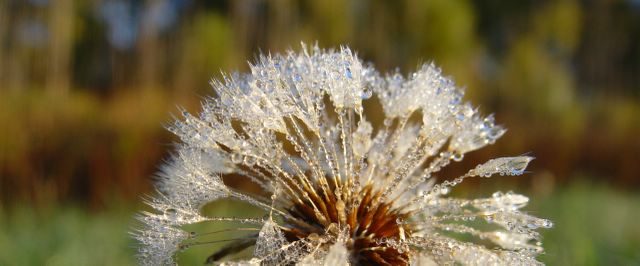
I tried dandelion greens as a side dish last night – pan fried with onions and garlic. They’re not bad. They are not good, but they are not bad either. Perhaps I should try canning them?
I used to think a lot about dandelions when I lived in the suburbs - kind, gentle creatures. Beautiful. Children love them. In the better part of ourselves, we all love them. We've just forgotten. (That's one of the things I came out here to remember.) And yet in their kind, gentle, beautiful way they draw down upon themselves the never ending wrath of the ChemLawn minions. I’ve actually seen grown men speak with real anger of dandelions in their bluegrass. This hatred of dandelions and preference for is another of the things belonging to the world of the Rooted Folk that I simply refuse to comprehend.
Sometimes in the spring, about this time of year, I would pick bunches of dandelion seed heads and walk through the neighborhood blowing them into the wind like a Johnny Appleseed of the weeds. Or I would pick a bunch of the yellow flowers, tie a red ribbon around them and leave them in random mailboxes.
In my clearer-headed moments, I knew that I couldn't beat ChemLawn. It's too big. Too pervasive. Too many people are in too deep. But it made me happy to try and the children always understood. And that leaves room for hope.
Subscribe to:
Posts (Atom)